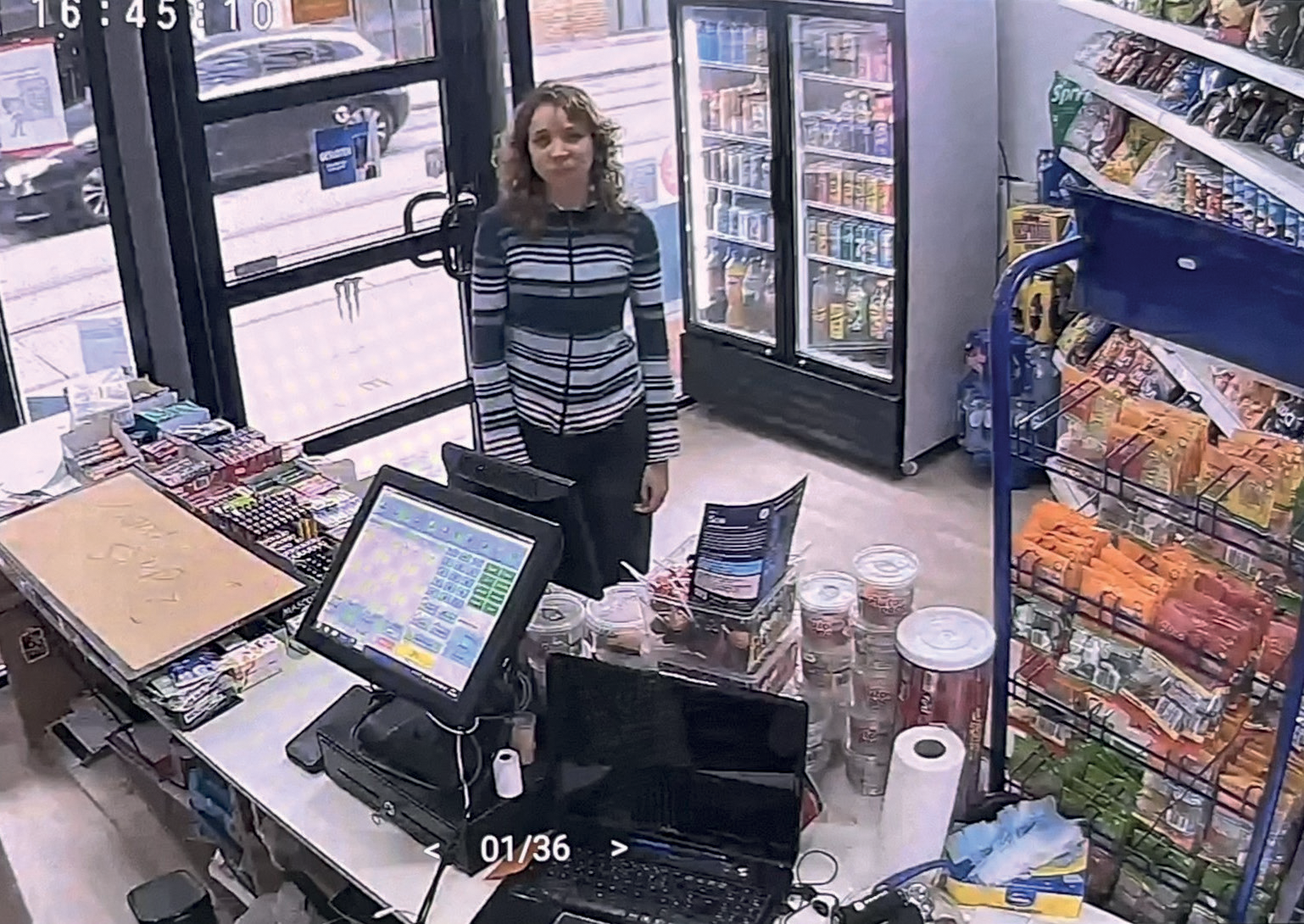
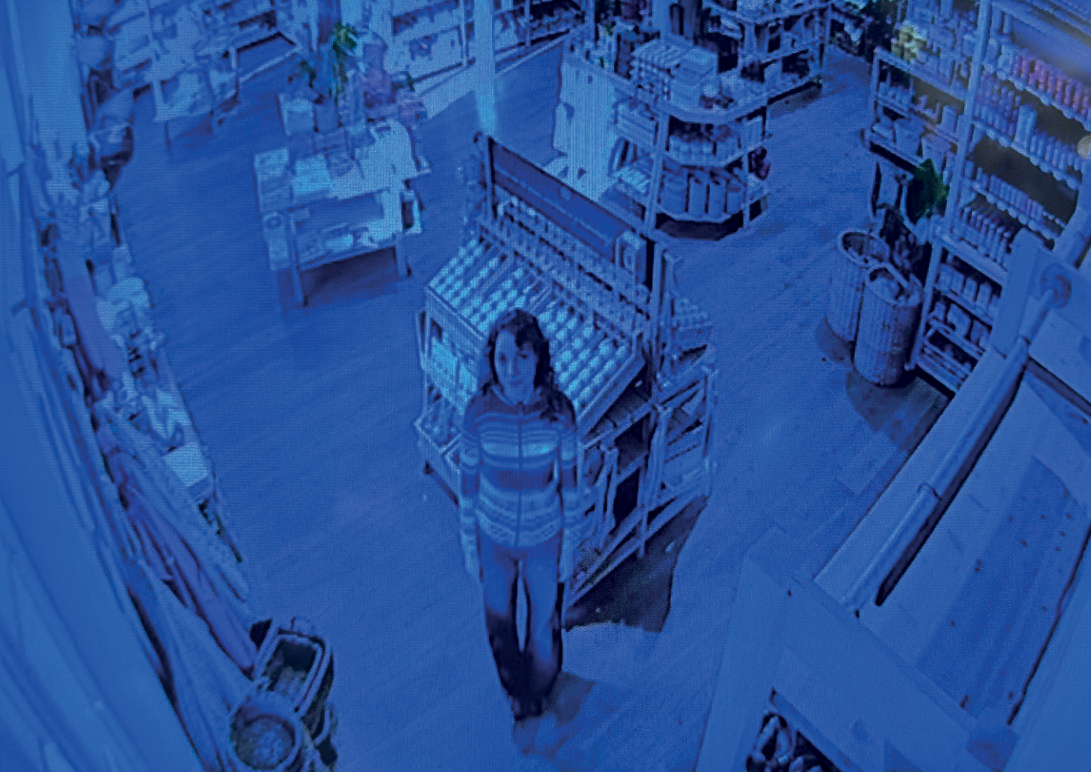
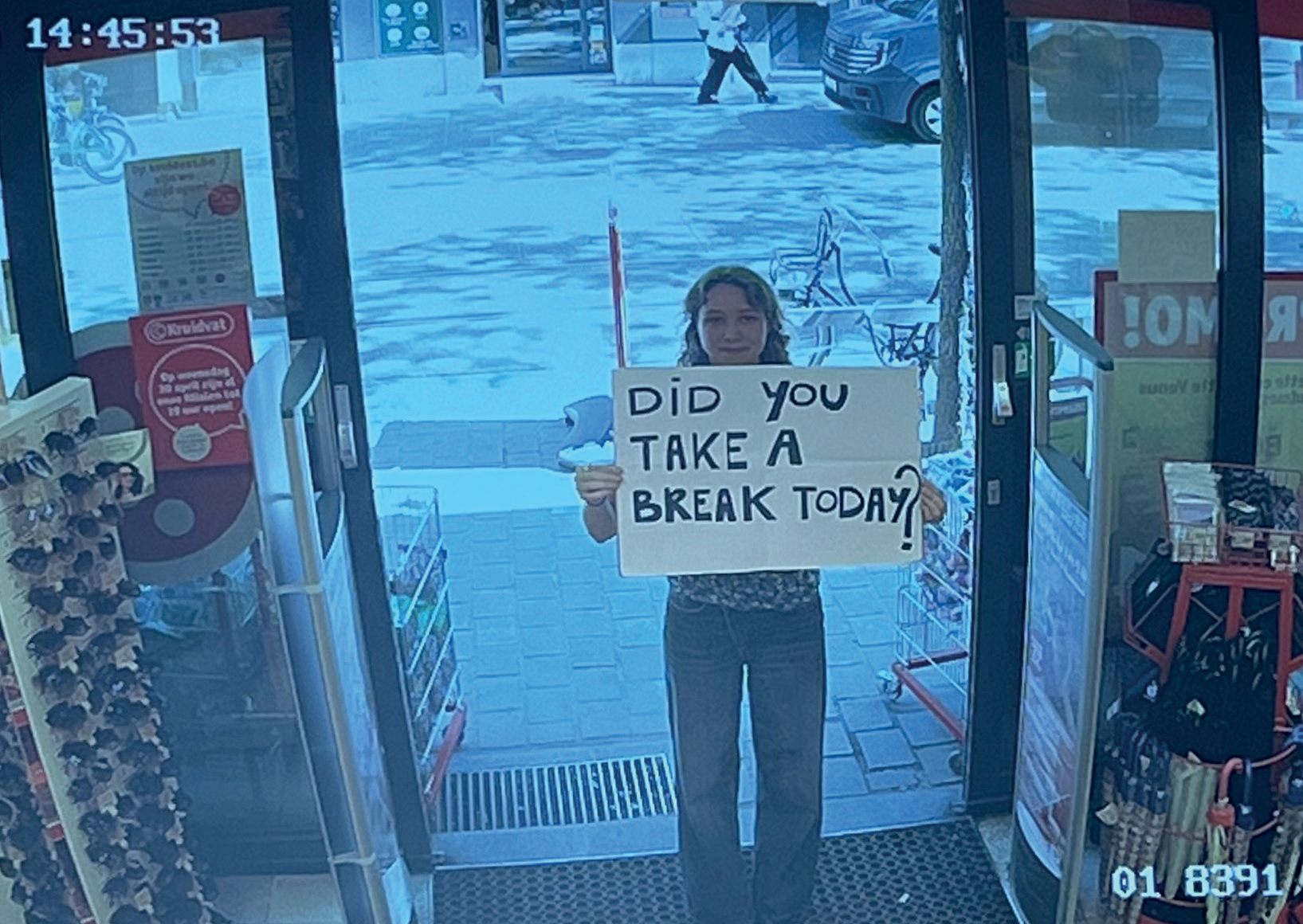
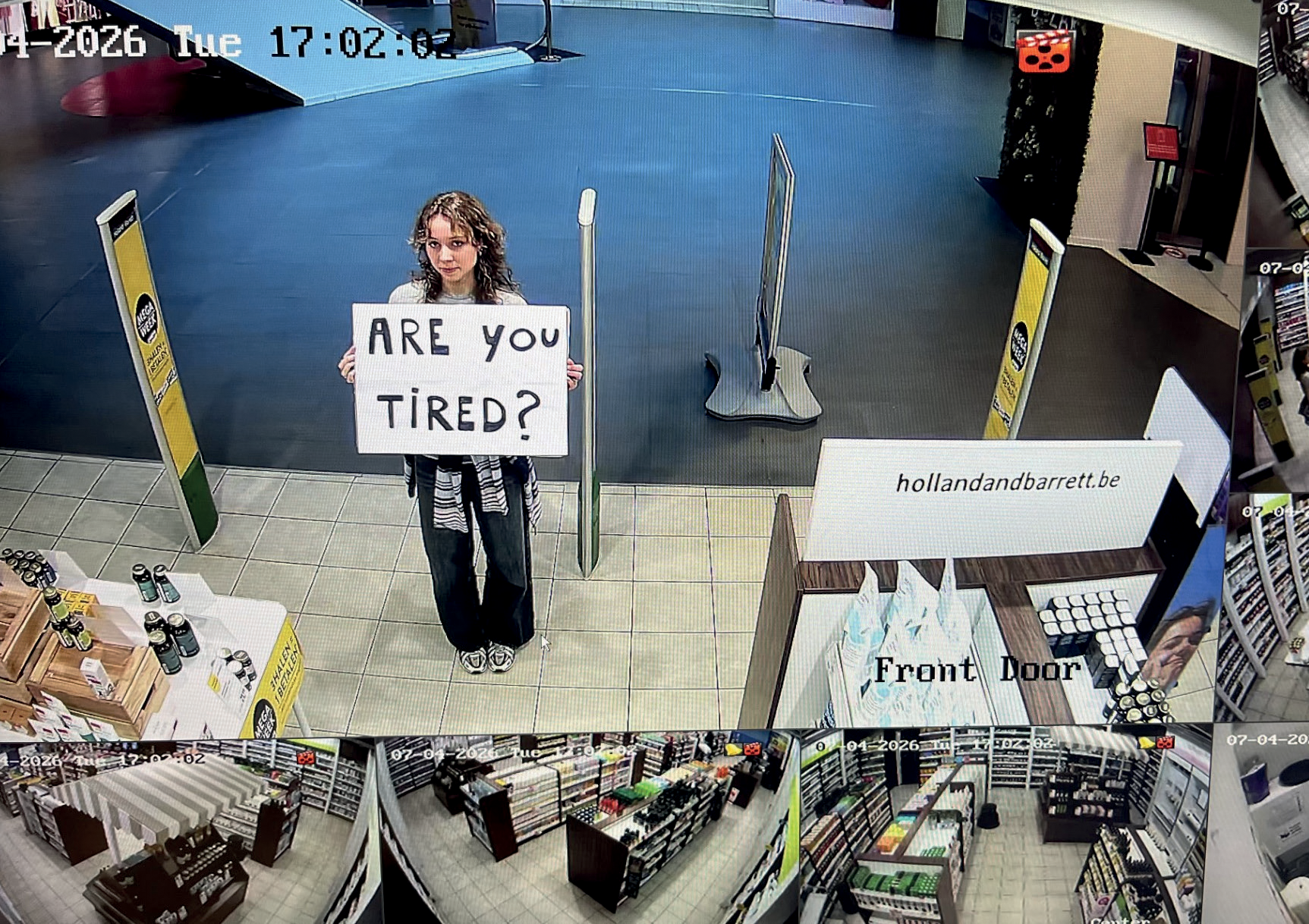
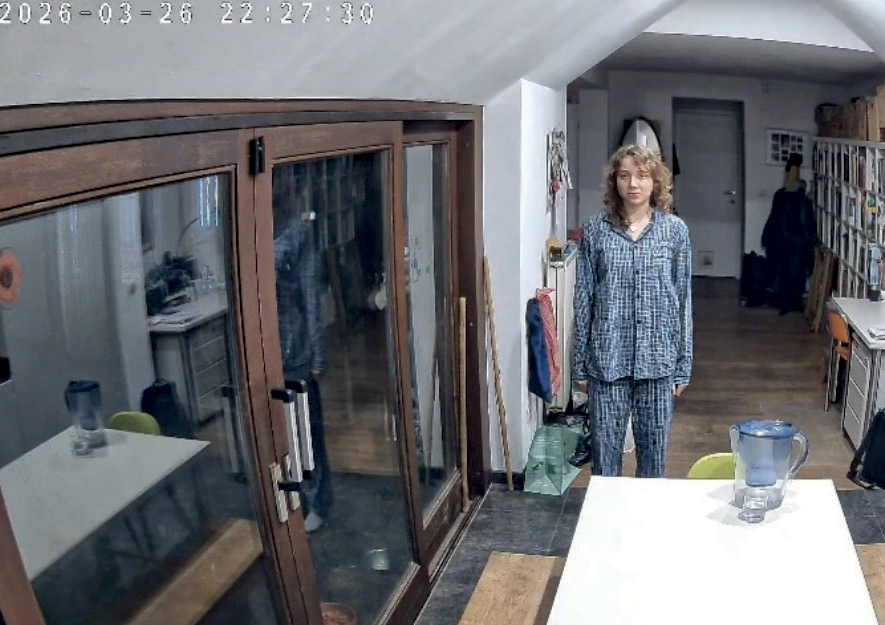
This visual essay explores the presence of surveillance cameras in urban and commercial spaces, questioning where the boundary of personal privacy lies. Through a photographic series, I position myself in front of different surveillance cameras to investigate what it means to be seen, recorded, and exposed in contemporary society. Is it scarier to know that you are being watched, or not?
In The Dark Forest, Liu Cixin describes a universe in which every act of communication is a risk: to reveal yourself is to expose yourself to potential danger. Bogna Konior writes in ‘The Dark Forest: Theory of the Internet’ that we live in a ‘dark forest’ where visibility is both necessary and threatening. This idea can also be applied to our physical surroundings, where surveillance cameras are increasingly present in everyday life.
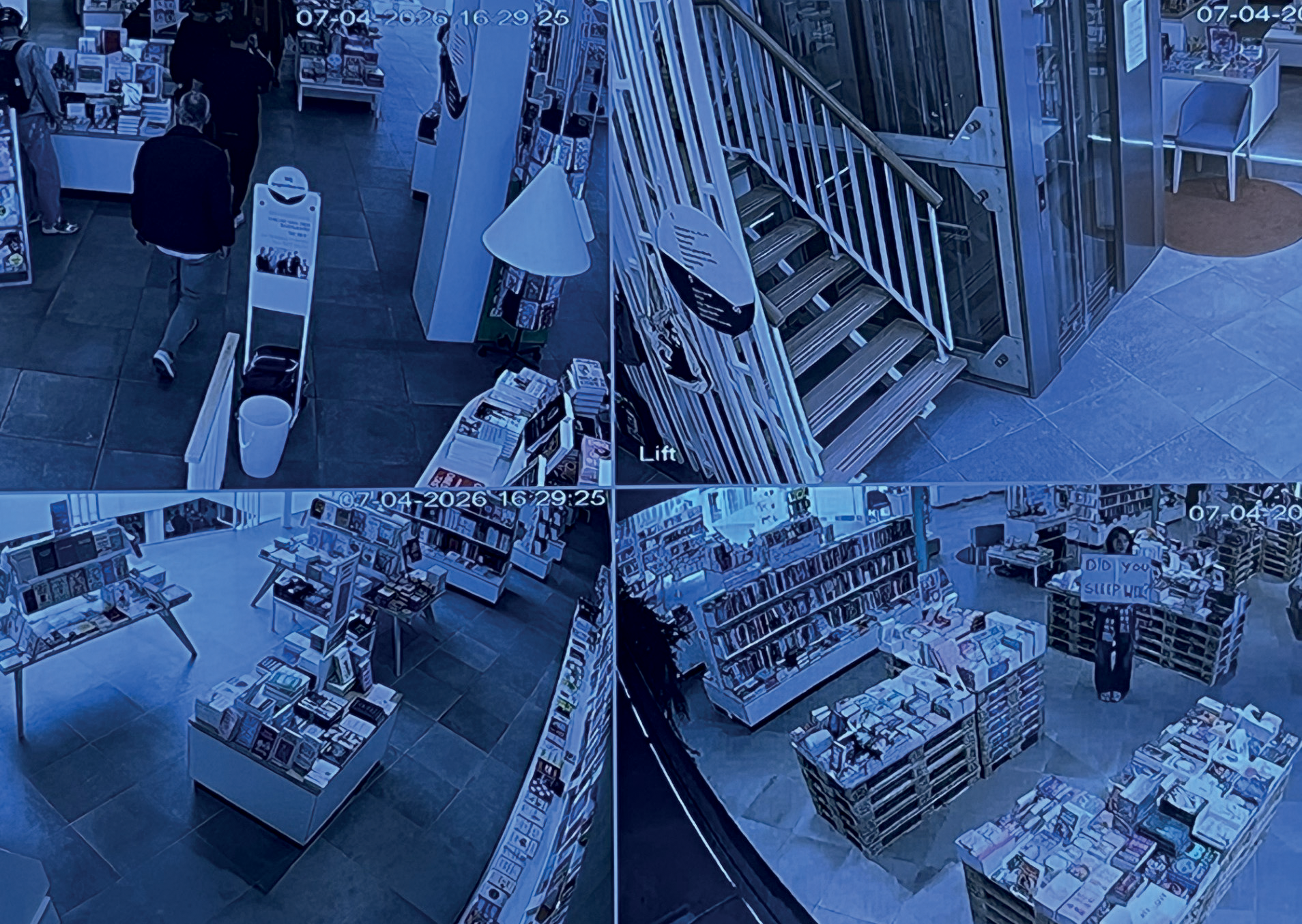
Today, we move through public and semi-public spaces where being watched has become unavoidable. Cameras are placed on street corners, inside shops, on building facades, and in transport systems. Much like the internet constantly invites us to share, the city implicitly demands visibility. To exist in these environments is to be captured, whether we are aware of it or not.
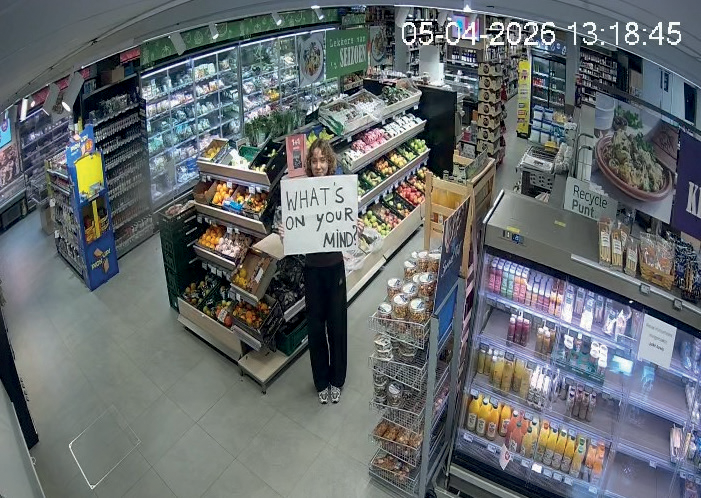
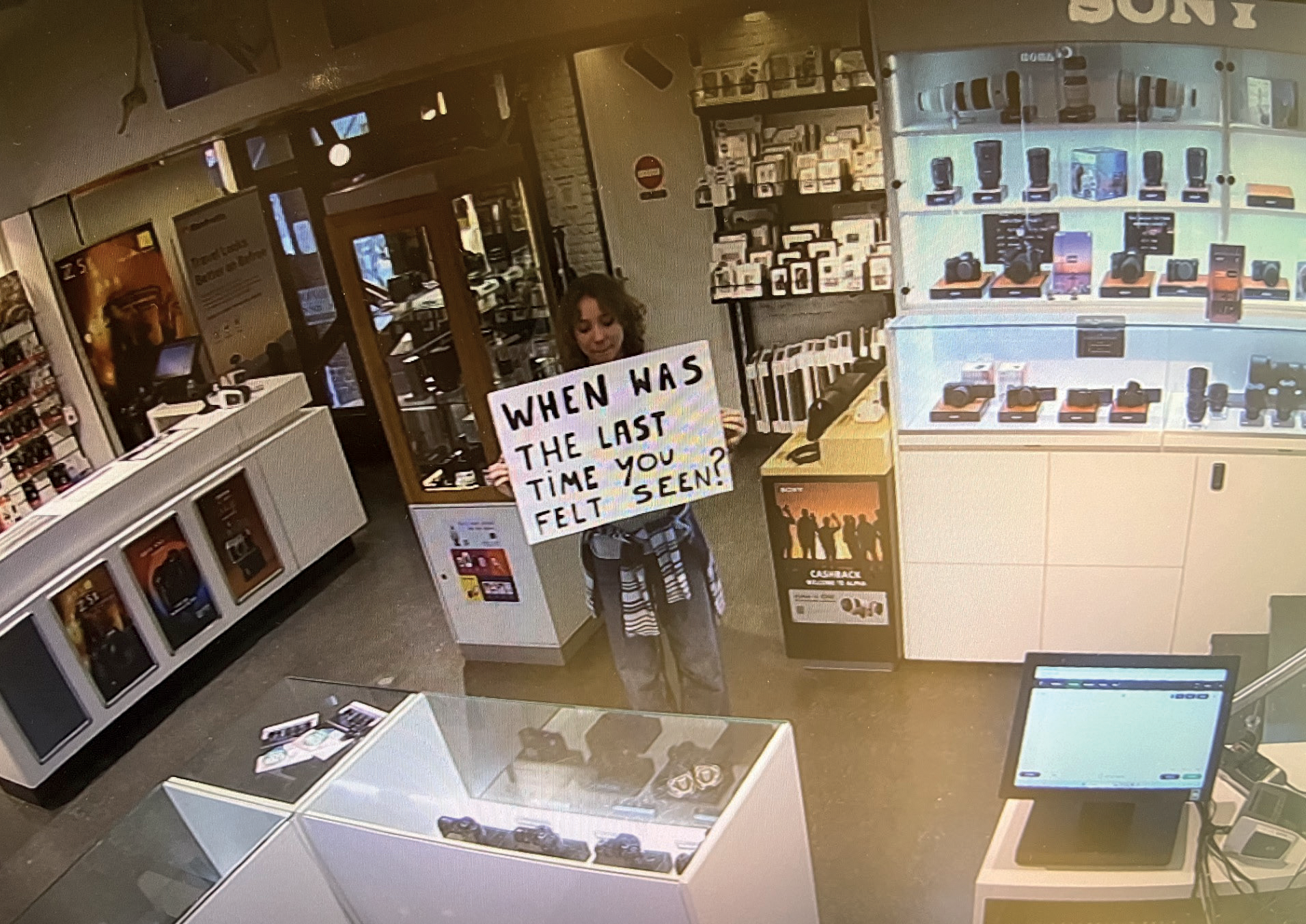
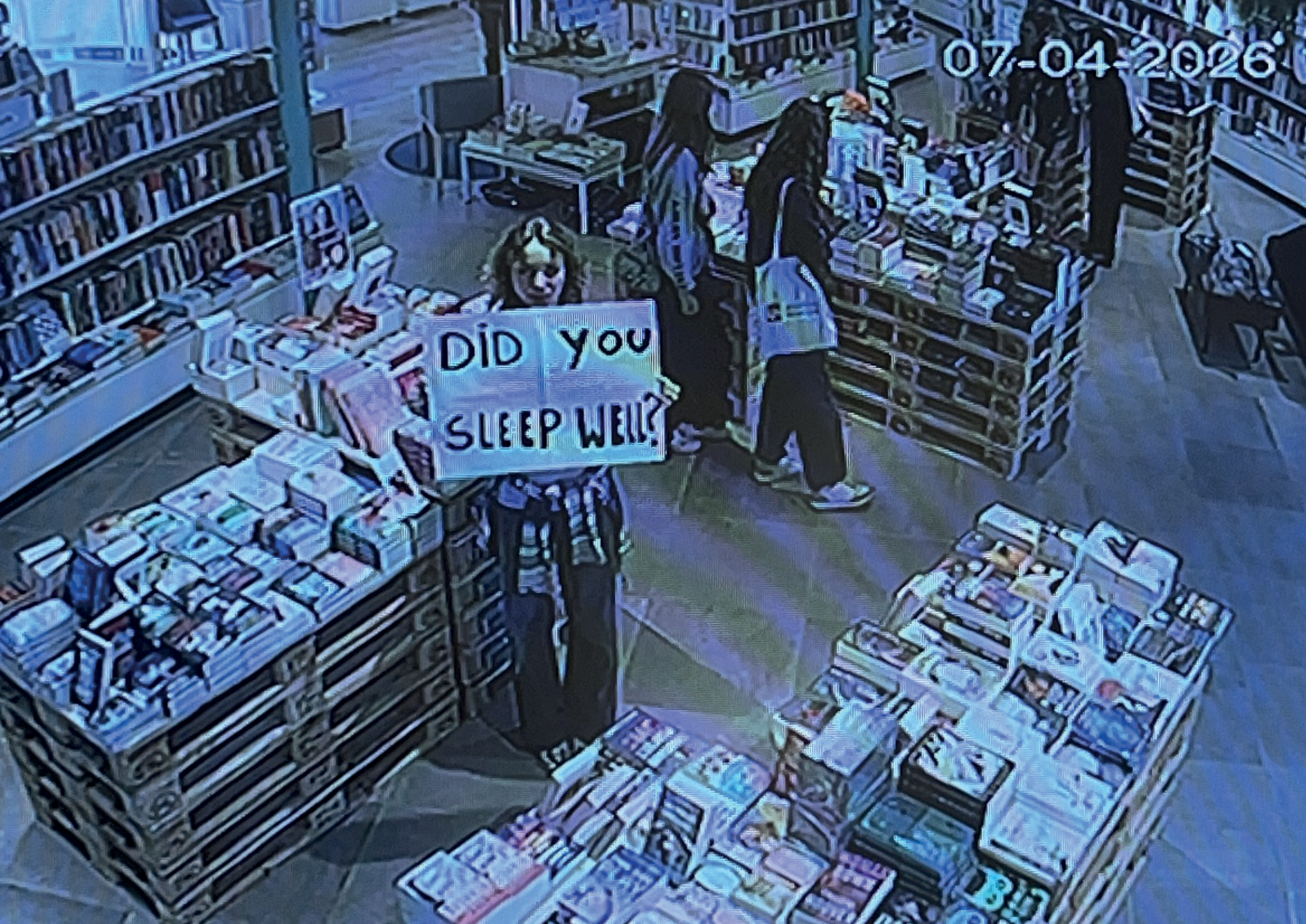
In my photographic series, I deliberately place myself within the field of vision of these cameras. At the same time, I hold a sign addressed to the unseen observer behind the screen. These signs display simple, everyday questions such as “Did you drink water today?” or “Did you take a break today?”
These questions introduce a human element into an otherwise impersonal system. Instead of confronting the camera, I address the person behind it someone who remains invisible but present. In doing so, I attempt to momentarily reverse or disrupt the typical dynamic of surveillance, turning observation into a subtle form of interaction.
However, this action also creates a paradox: does consciously presenting myself grant me a sense of control, or does it ultimately reinforce a system in which visibility is inevitable? By choosing to be seen, I participate in the very structure I am questioning.
Surveillance is often justified in the name of safety, yet it simultaneously limits our control over our own image and identity. As our physical presence becomes data, the boundary between public and private space becomes increasingly blurred. We are not only seen, but also recorded, stored, and potentially analyzed.
This work reflects on the tension between voluntary and involuntary exposure, between connection and control. What does it mean to be seen? When does visibility become a form of self-expression, and when does it become a mechanism of power? Is it more unsettling to know that you are being watched, or to remain uncertain?
Perhaps the city, like the internet, has become a dark forest a space where we are never truly alone, and where every act of visibility carries a potential risk.
“A traveller who enters the forest is never alone, eyes wrapped around her like insulation tape. There is only one, simple riddle to answer at the entrance to the internet: What’s on your mind?” 1